Python Certification

Why certify in Python?
Python provides a foundational programming environment for software development, data analysis, and automation in educational and professional settings. Widely used to build applications, analyze data, develop machine learning models, and automate tasks, Python is known for its readable syntax and extensive standard library, making it suitable for both beginners and advanced use cases. A Python certification allows students and job seekers to demonstrate their programming skills and supports their academic success and long-term career readiness.
A Python certification measures practical programming skills with no prerequisites. It is well suited for students and adult learners who want to validate their understanding of Python syntax, data structures and objects, use of modules and packages, and their ability to write, debug, and optimize code efficiently.

Skills Assessed
The Tosa Python certification exam evaluates five key domains:
Language and Syntax
The questions in this domain cover knowledge of the Python language and its syntax. The candidate is tested on their knowledge of the characteristics and specificities of the programming language, its general features, and its syntax.
Data Structures and Objects
The questions in this domain cover objects in Python and assess candidates’ ability to use and create built-in objects and custom objects designed to solve specific problems. They also evaluate the creation and use of functions, as well as understanding and applying object-oriented programming features.
Modules and Packages
The questions in this domain test candidates on their ability to create, import, and use modules within a project. The questions also cover the knowledge and ability to use the main modules of the standard library.
Code Optimization
The questions in this domain encompass the skills and knowledge needed to create high-performance Python programs. Questions They cover mastery of the performance of Python tools and functions, as well as the ability to recognize and reproduce simple algorithms to applied cases.
Certification Exam Specifications
Test Format
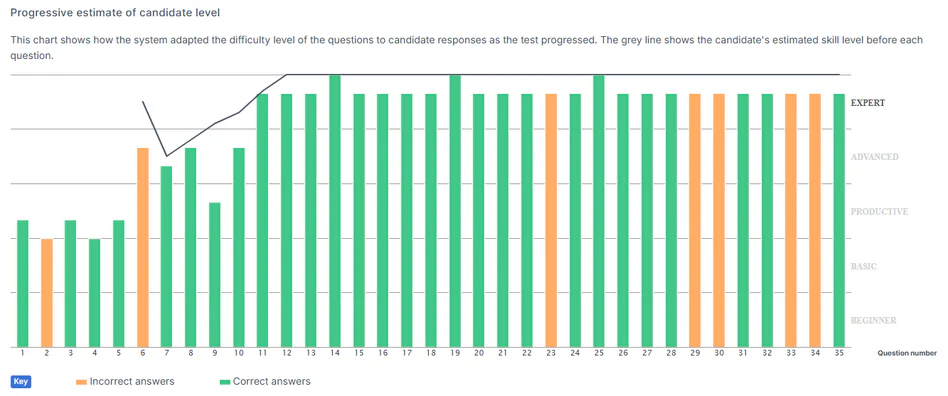
The Tosa certification for Python lasts one hour and a half and uses a 35-question adaptive exam drawn from a pool of more than 135 items, including multiple-choice, interactive, and live coding tasks. The test evaluates a candidate’s skills and knowledge in the five domains presented above and selects questions from five difficulty levels depending on the abilities of the test taker.
Exam Conditions
Tosa certification exams are not open book. The certification tests must be taken in a secure environment and are proctored at all times in accordance with the Tosa Exam Policy. Adaptive testing produces a unique sequence of items for each candidate, reducing the risk of cheating and item memorization. In-person and remote proctoring options are available.
Validity and Retakes
The certification is valid for 3 years. Earners may retest anytime to improve their score or to maintain their certification. There is a minimum 24-hour waiting period between two retakes. Candidates receive a new version of the test with each attempt.
Score, Proficiency Level, and Award
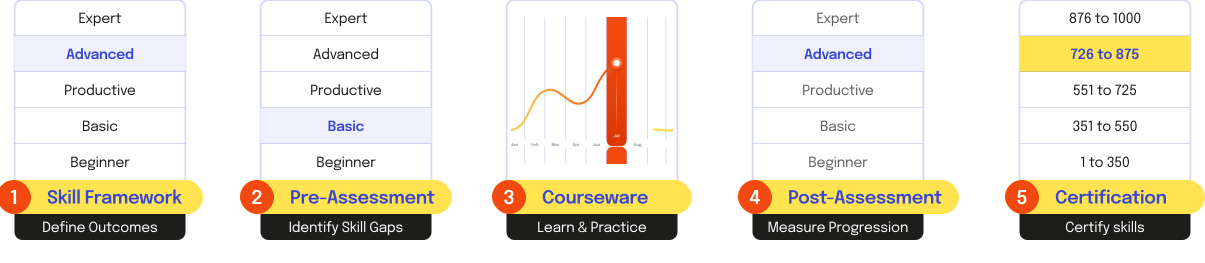
The result of the exam is a numeric score between 1 and 1000 points associated to a proficiency level. It is calculated using a pattern-scoring model (IRT). The minimum score required to earn the certification is 551. Certification earners receive a Tosa certification diploma that indicates the test date, the score, and the proficiency level achieved. It contains a unique authentication code for online verification. Earners with a score of 551 and above are also eligible to receive a Credly digital badge.
| Score | Proficiency Level | Award |
|---|---|---|
| 1-350 | Beginner | Certificate of Completion |
| 351-550 | Basic | Certificate of Completion |
| 551-725 | Productive | Diploma and Credly Digital Badge |
| 726-875 | Advanced | Diploma and Credly Digital Badge |
| 876-1000 | Expert | Diploma and Credly Digital Badge |
Preparing for a Certification Exam
Reaching a productive level or higher typically requires around 150 hours of training and hands-on practice with Python, depending on prior knowledge and learning format. To prepare for the Tosa exam, we recommend that learners:
Utilize the Tosa Exam Blueprint
Take a Tosa practice assessment
Each Tosa certification includes two practice assessments to be used as a pre-course assessment and a post-course assessment. The pre-assessment helps determine the initial skill gaps to cover during the course. The post-assessment allows for progress measuring and ensures exam readiness.
Access a free sample of the Python practice assessment test.
Complete a Tosa-aligned course
Ready to start certifying?
K-12 Education
Prepare your students for a rapidly evolving world. Equip them with essential digital skills for future academic and career success.
Learn MoreHigher Education
Provide scalable, industry-aligned digital skills assessments, exams, and certifications that prepare your students for the workforce.
Learn MoreAdult/Workforce Education
Upskill current and new employees or trainees with the digital competencies they need to stay competitive in today's evolving workforce.
Learn MoreIndividuals
It's time to stand out with Tosa certifications, the international standard for measuring digital skills. Prove your expertise to employers with verified credentials.
Get Started