For career and technical education (CTE) students, earning a certification can be an important milestone. It can provide evidence of skills developed in the classroom and give students something tangible to bring with them as they pursue internships, postsecondary education, and employment.
But what happens before students earn the credential may be just as valuable.
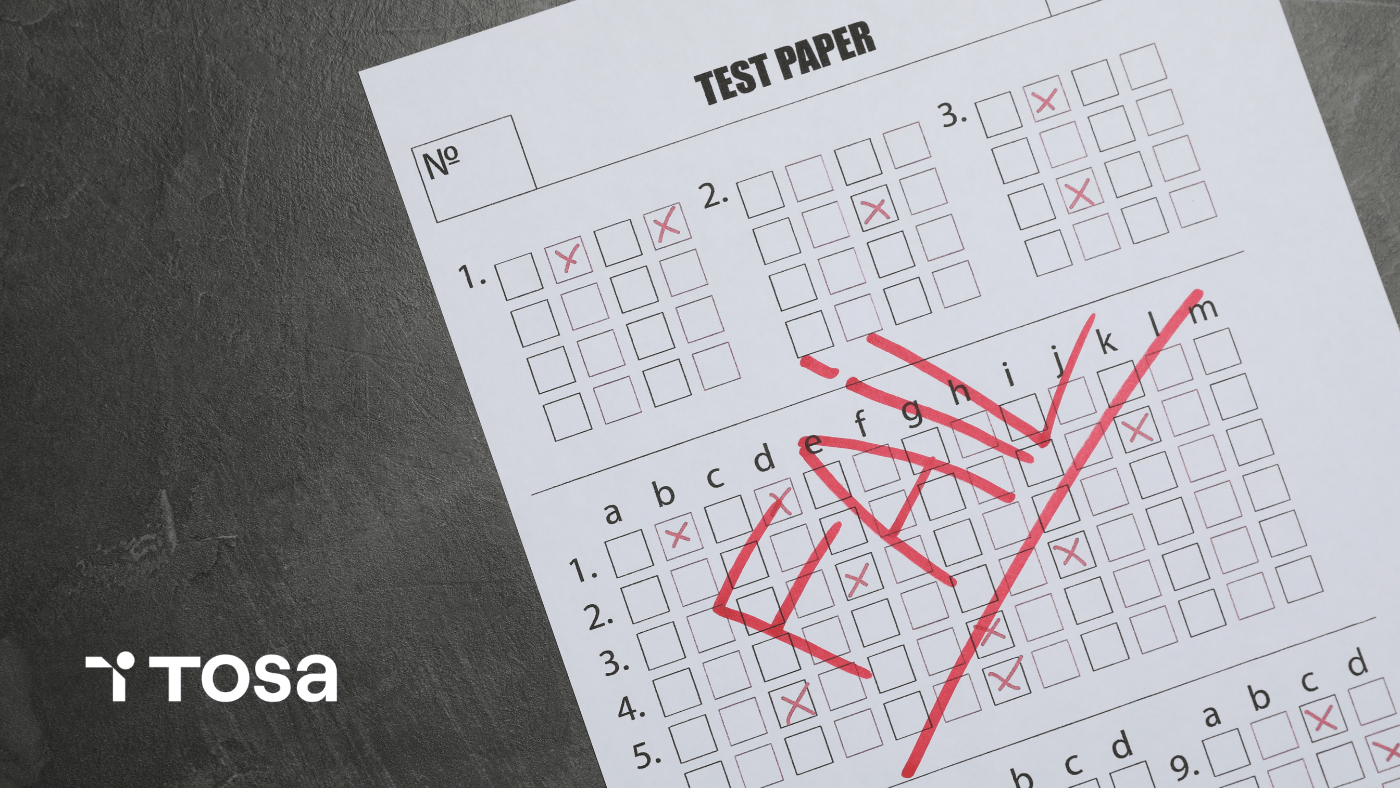
A traditional pass/fail certification answers an important question: Did the student meet the required standard?
A proficiency-based assessment can answer additional questions. What can the student do right now? Where are the gaps? What should they work on next? How much progress have they made?
For educators working with students who bring different levels of experience and ability into the same classroom, those answers can provide a clearer picture of student learning and sometimes reveal capabilities they didn’t know were there.
That’s what happened at Heritage High School, part of Evergreen Public Schools in Vancouver, Washington.
The Challenge of Measuring Skills in a CTE Classroom
CTE students can enter the classroom with very different levels of experience and skill.
One student may have years of informal experience with a particular technology. Another may be encountering it for the first time. Some students are highly motivated by a future career goal. Others may not see the connection between what they’re studying and life after graduation.
Those differences can be particularly pronounced in technology courses, where students may also develop skills outside the classroom.
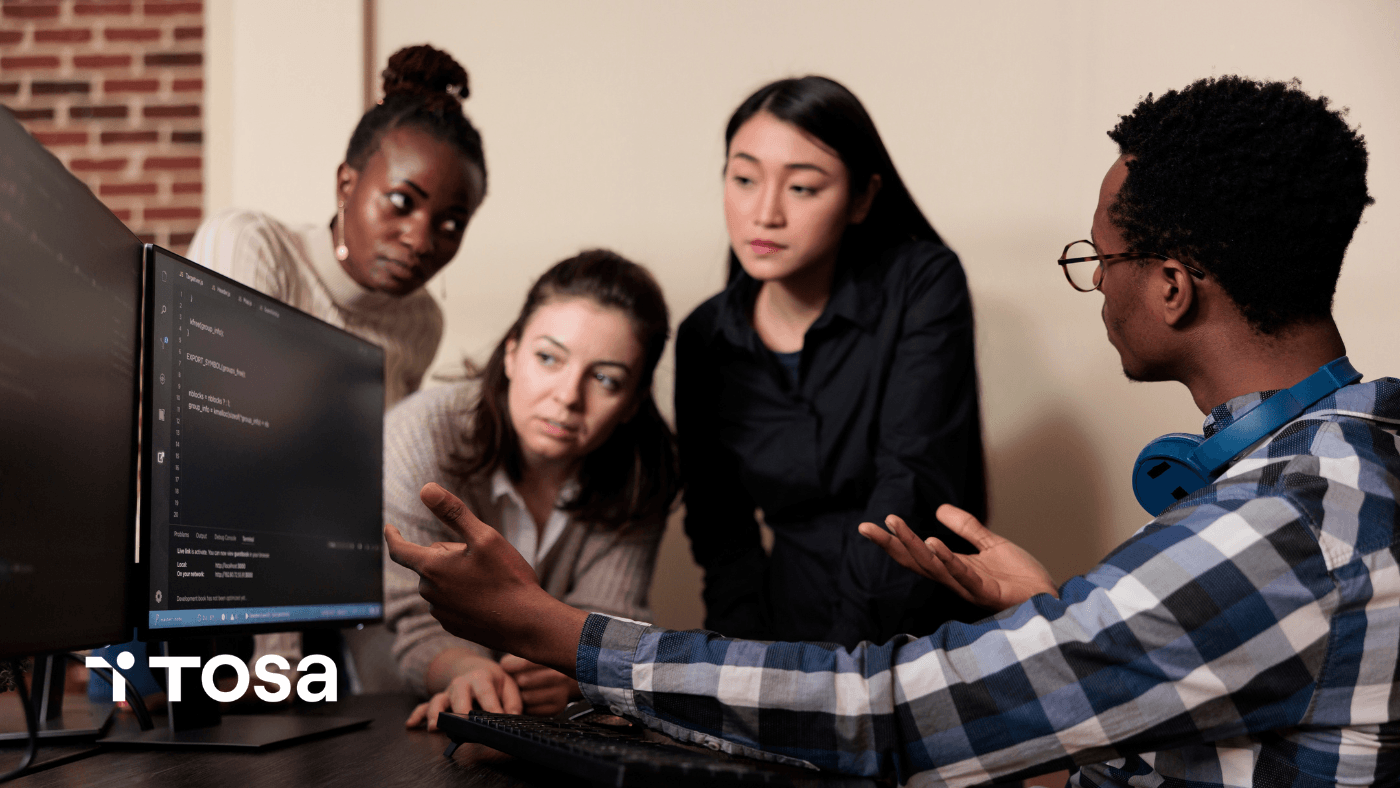
At Heritage High School, CTE teacher Daniel Bird saw that range firsthand in his computer science classes. Some students were focused on AP Computer Science, while others had little programming experience. Still others had taught themselves skills beyond what the curriculum covered.
Bird wanted certification opportunities for his students, but the options he initially encountered were pass/fail.
He knew he could write a test students could memorize and be successful on, but what would that outcome show? He wanted to understand what students could actually do.
That led Heritage to Tosa and a different approach: proficiency-based assessment.
Moving From a Score to a Starting Point
Tosa assessments measure proficiency on a five-level scale, from Beginner to Expert. Rather than treating assessment solely as an endpoint, educators can use the results to understand current proficiency, identify areas for development, and establish a path forward.

One Heritage senior demonstrated what that can look like.
The student was highly motivated to become a programmer and build a career that would allow him to help his family. But when he completed his first Tosa assessment, his result was Basic.
Instead of treating the result as a failure, the student and his teacher used it as a starting point. They set a goal of reaching productive proficiency and used the assessment results to identify areas where he needed to grow.
On his second assessment, he reached Advanced. When he later completed the certification assessment, Bird watched the results come in on his dashboard. The student had reached the Expert level.
The progression mattered because the final credential captured something a pass/fail result alone could not: a student had identified gaps, worked to close them, and demonstrated a high level of proficiency.
The assessment hadn’t simply measured what he knew at the beginning. It helped give direction to what came next.
When Assessment Reveals Hidden Ability
For two other Heritage students, the experience looked very different.
Neither seemed particularly motivated in computer science class. One had expected the course to be an easy A but was earning Ds and Fs, and efforts to engage the students through robotics and other activities had made little difference.
Tosa presented a different kind of challenge. Their initial assessment results weren’t exceptional, but both students began working through the material. By the time they completed their certification exams, they had each reached the Advanced level.
Their performance offered an important reminder: Disengagement and inability are not the same thing.
A student who isn’t demonstrating much in day-to-day classwork may have skills that aren’t readily visible or may respond differently when presented with a concrete challenge and an opportunity to demonstrate proficiency.
For educators, that makes assessment more than a way to validate what they already know about students. It can also challenge their assumptions.
When Confidence and Proficiency Don’t Match
Assessment can reveal unexpected strengths. It can also reveal gaps students don’t realize they have.
Another Heritage student started the year with considerable confidence in his programming abilities. He was a self-directed learner who watched tutorials and pursued programming independently. He had even built an app intended to help students experiencing loneliness.
Then the student took a Tosa assessment and received a Beginner result.
The score shocked him.
Rather than dismissing the skills the student had already developed, the result identified areas of programming he had not yet mastered.
Initially, the student resisted that message. He felt it was unfair to be assessed on skills he hadn’t learned yet. His second assessment didn’t show improvement either.
Eventually, the student began to understand the gaps the assessment had identified and recognize how much more there was to learn before entering college.
His lesson may be one of the most valuable things an assessment can provide a learner: a clearer understanding of what comes next.
What Proficiency-Based Assessment Adds to CTE Certification
The Heritage students had very different experiences.
One started at Basic and worked his way to Expert. Two students who appeared disengaged demonstrated Advanced proficiency when given the right challenge. A highly confident student discovered that his skills weren’t as comprehensive as he had assumed.
There isn’t one tidy definition of success across those stories, and that is the point.
Proficiency-based assessment can provide information that a binary pass/fail result cannot. Instead of telling students only whether they have crossed a particular threshold, it can help them see where they are along a continuum of skill development.
That can create a learning cycle:
Assess → identify strengths and gaps → learn and practice → reassess → demonstrate proficiency
The approach also aligns with what other CTE leaders are looking for as they expand certification opportunities.
At Spokane Public Schools, for example, CTE Coordinator Suzie Gretch is expanding opportunities for students to earn stackable credentials across programs including engineering and Microsoft applications.
“Our goal as teachers is student growth,” says Gretch. “Tosa does exactly that.”
Helping Students Demonstrate What They Can Do
For CTE programs, certification is ultimately about more than adding another line to a student’s résumé.
Students are preparing to enter environments where they will need to apply their skills.
For employers, knowing that a student completed an Excel course may be useful, but it doesn’t necessarily show whether that student can work effectively in Excel. Similarly, knowing that a student studied programming doesn’t show what they can actually do.
That makes authentic measures of proficiency an important part of connecting CTE learning with workforce-ready skills.
Tosa assessments are designed to measure how students apply their digital skills rather than relying solely on memorized knowledge. And because proficiency can be measured before certification, students have an opportunity to see where they stand and identify areas for continued development.
That changes the role assessment can play.
It becomes not only proof of learning, but also information for learning.
A Clearer Picture of Student Growth
At Heritage High School, the most important lesson was that proficiency gave students and their teacher information they hadn’t had before.
Students could see their abilities more clearly; they could identify gaps, establish goals, and discover skills they still needed to develop.
Their teacher gained a more complete picture of what individual students were capable of.
For CTE educators trying to prepare students for what comes after high school, that distinction matters.
A credential can demonstrate an outcome, while the process of working toward it can help students understand how they got there and where they can go next.
Learn how Tosa digital skills assessments and certifications can help your CTE students measure proficiency, build skills, and demonstrate what they can do.
FAQs: Proficiency-Based Assessment and CTE Certification
What is proficiency-based assessment?
Proficiency-based assessment measures the level at which a student can demonstrate particular skills rather than providing only a pass/fail result. It can help students and educators identify current strengths, uncover skill gaps, and determine areas for continued learning and practice.
How is proficiency-based assessment different from pass/fail certification?
A pass/fail certification indicates whether a learner met a particular threshold. Proficiency-based assessment provides additional information about the learner’s current skill level. That information can help students understand where they are, what they need to improve, and how their skills develop over time.
How can proficiency-based assessment support CTE students?
Proficiency-based assessment can help CTE students connect classroom learning with practical skill development. By identifying strengths and gaps, students and teachers can establish learning goals, focus practice where it is needed, and assess again to measure progress before or as students pursue certification.
Why are digital skills certifications valuable for CTE students?
Digital skills certifications can give students evidence of skills they can share with employers, internship providers, and postsecondary institutions. When certification is based on demonstrated proficiency, students can communicate not only what they studied but what they are prepared to do.
How can CTE educators use assessment results to support student growth?
CTE educators can use proficiency results to identify individual skill gaps, differentiate learning goals, guide practice, and help students monitor their progress. Results may also reveal strengths or needs that aren’t apparent from classroom participation or grades alone.