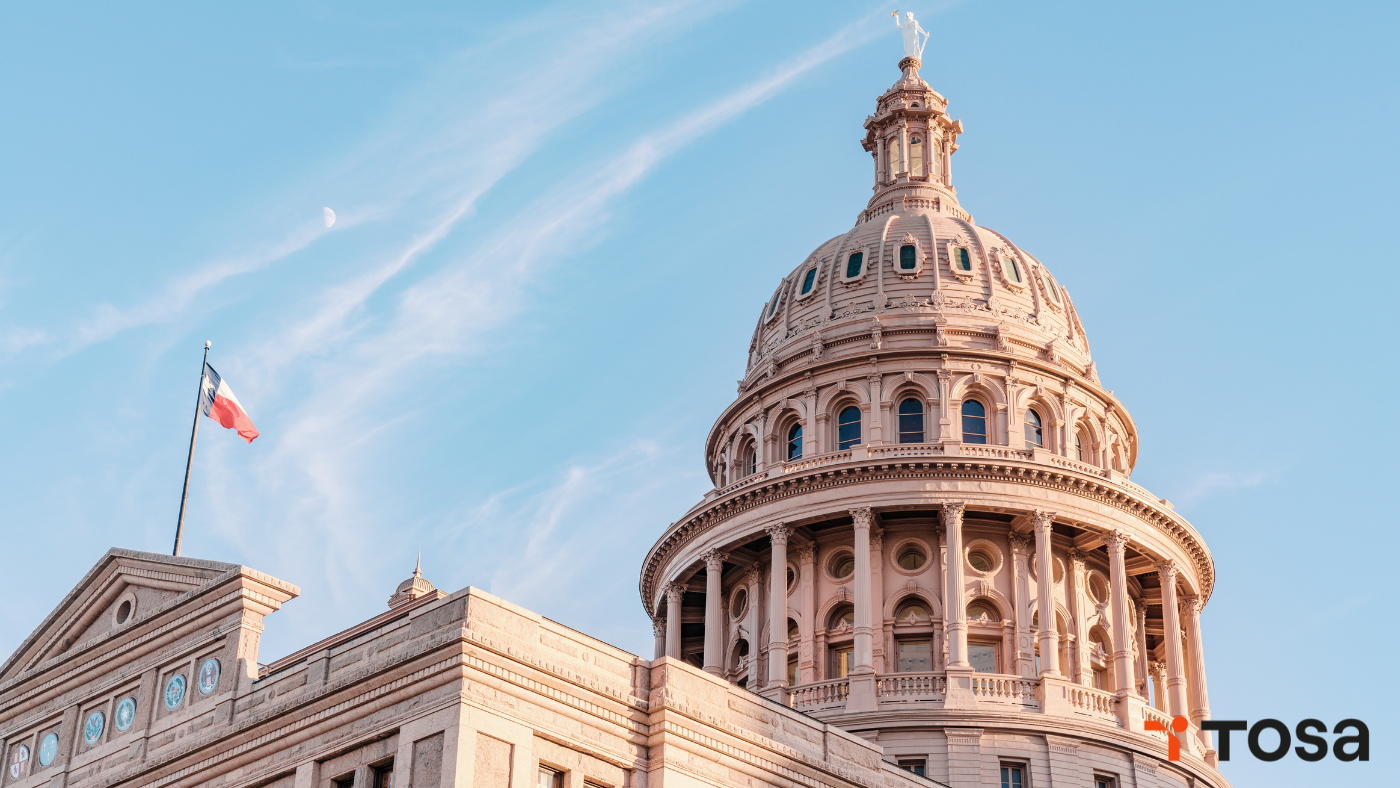
The recent passage of Texas House Bill 8 (HB-8) marks a vital shift in the funding model for community colleges in the state. Authored by Rep. Gary VanDeaver and sponsored by Sen. Brandon Creighton, signed into law by Gov. Greg Abbott in June, HB 8 introduces a dynamic, student-centered, and outcome-focused approach to financially support community colleges, which have historically faced long-standing challenges and inequities due to the previous funding system.
"The State of Texas continues working to ensure our public community colleges remain competitive and able to fully support the needs of our growing, diverse workforce," said Abbott. "House Bill 8 will be an important tool to help enhance the role of public junior colleges in workforce training and preparation for high-demand careers."
Addressing Historical Funding Inequities
Traditionally, community colleges in Texas received funding based on a formula that was, by some standards, overly reliant on enrollment numbers. This model often fell short of covering enrollment costs and unfairly impacted colleges serving first-generation students, older students, and economically and academically disadvantaged students. HB 8, which provides a budget of $650 million over two years, aims to rectify these challenges by implementing a more equitable and responsive funding structure in the state.
The Four New Metrics of Success with HB-8
The heart of HB 8 lies in its four new metrics, which introduce an emphasis on student outcomes through the completion of workforce-valued postsecondary credentials. According to a press release issued by the Texas Higher Education Coordinating Board, funding will be based the following four newly defined outcomes:
- The number of credentials of value awarded, including badges, certificates, and degrees, that position graduates for well-paying jobs. According to this definition, "credentials of value" are calculated by measuring whether the wages earned by the student holding that particular credential are higher than 1) the cost of the credential, and 2) allow the student to exceed the typical earnings of a student with only a high-school diploma.
- Credentials of value awarded in high-demand fields where employers are looking for skilled employees. In addition to badges, certificates, certifications, and degrees, this definition provides special incentives for credentials associated with high-demand fields, such as information technology (IT). These fields will be regularly assessed and updated based on real market data, such as job and wage growth.
- Successful student transfers from community colleges to four-year universities.This definition requires that the student log at least 15 semester credit hours at a community college before transferring to a four-year college or university for the first time. If this metric is achieved, the community college is rewarded.
- Completion of a sequence of dual credit courses, which are offered to high school students and can set them on early pathways to success. If a high school student logs at least 15 hours of dual credit, completed in either an academic program aimed toward a degree, or a workforce program leading to a credential, the community college is rewarded.
Enhanced Transparency and New Programs
HB 8 also fosters increased transparency when it comes to the value and cost of educational programs. It requires information that helps students compare programs across institutions, including data on the starting salaries of graduates and necessary credentials for entry into high-demand jobs.
Moreover, HB 8 introduces new programs, like the Financial Aid for Swift Transfer (FAST), the Texas Direct Associate Degree, and the Opportunity High School Diploma Program. These initiatives aim to make education in Texas more accessible and seamless, particularly for economically disadvantaged students seeking a straightforward path from community colleges into four-year institutions.
The Road Ahead
HB 8 is poised to revolutionize community college education in Texas. As community colleges transition into this new system (which took effect on Sept. 1, 2023) there is now a strong focus on improving student outcomes and aligning educational pathways with the evolving needs of the Texas workforce.
In summary, HB 8 represents a forward-thinking approach to educational reform in Texas, promising a more equitable and effective community college network that not only addresses the financial challenges of the past but also paves the way for a skilled, prepared workforce ready to take on the future.
Why Now?
The new bill was based on a report from the Texas Commission on Community College Finance (TxCCCF). The TxCCCF played a crucial role in shaping the bill, focusing on aligning community college funding with Texas' strategic plan for higher education. The report outlined three core recommendations:
- Reward community colleges for positive student outcomes. HB 8 rewards community colleges for positive student outcomes through metrics like the attainment of credentials of value, as well as the number of successful transfers to four-year colleges and universities, ensuring colleges are incentivized to provide high-quality education that leads to measurable student success.
- Increase affordability and financial aid, including for low-income students. A second key recommendation from the TxCCCF report was to enhance affordability and expand financial aid, particularly for low-income students. Through initiatives like FAST, HB 8 opens up more opportunities for all students
- Increase capacity at colleges to meet changing workforce needs. HB 8 increases capacity at colleges by establishing a funding structure that incentivizes colleges to align their programs with high-demand fields and high-paying jobs.
How We Can Help
At Isograd, the developer of the proficiency-based Tosa certification, we applaud the state of Texas for its continued efforts to prepare students in higher education for employment and their willingness to adapt and meet the changing needs of the workforce.
Want to learn more about Tosa and how we're meeting the needs of students in higher education? Schedule a meeting with your Tosa representative in Texas.
Updated 11/16/23