In today's rapidly evolving job market, Career and Technical Education (CTE) programs are pivotal in preparing students for success. In the most credible CTE programs, schools and educators integrate reputable digital skills certifications to demonstrate students’ workforce readiness. However, the true potential of these programs is realized when educators leverage the data from those certifications to inform and enhance instruction. This approach not only addresses skill gaps but also tailors learning experiences to individual student needs.
Why Digital Skills Certification Data Matters in CTE
High-quality digital skills certifications serve as more than just credentials—they provide actionable insights into student competencies. By regularly analyzing certification data, educators can:
- Identify proficiency levels: Understand which students have mastered specific skills and which require additional support.
- Detect skill gaps: Pinpoint areas where students consistently struggle, allowing for targeted interventions.
- Inform instructional strategies: Adjust teaching methods based on data-driven insights to meet diverse learning needs.
Research underscores the importance of utilizing assessment data to inform instruction. For instance, studies have shown that benchmark assessments, administered at regular intervals, help educators measure student learning against academic standards and adjust teaching strategies accordingly.
Turning Data into Action: A 5-Step Workflow
To effectively use certification data, educators can adopt the following workflow:
Pre-assess with adaptive tests: Begin with adaptive assessments that adjust difficulty based on student responses. This approach provides a precise measurement of individual capabilities. Tosa certifications use adaptive testing, providing learners with a unique experience of interactive activities, enriched multiple-choice questions, and in-application exercises.
Analyze data to identify gaps: Review assessment results to identify common areas where students struggle, focusing on specific skills rather than general performance. Tosa assessment results are captured in a comprehensive, easy-to-interpret skills reports that are generated at the end of each test to help:
Identify an individual’s skills and skill gaps
Adapt course content to meet individual needs
Measure the effectiveness of a program/course
Group students by learning needs: Based on identified gaps, organize students into groups that require similar interventions, ensuring targeted support. If you’re using Tosa reports, easily sort students by areas of need based on skills domain proficiency.
Implement targeted instruction: Design and deliver lessons that address the specific needs of each group, utilizing differentiated teaching strategies. For more best practices on integrating digital skills certification and coursework into your classroom, check out this Tosa blog post.
Re-assess and adjust: After instruction, conduct follow-up assessments to measure progress and adjust teaching methods as needed.
This iterative process ensures that instruction remains responsive to student needs, fostering continuous improvement.
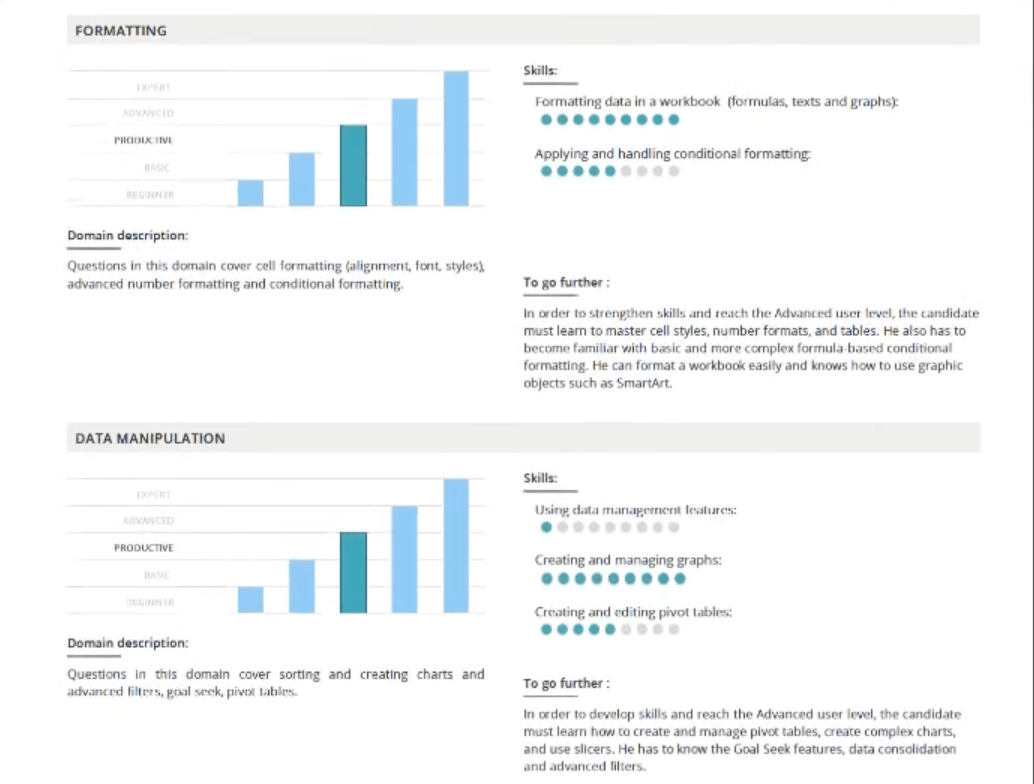
Tosa digital skills assessments generate individual student reports that break down performance by domain with specific next steps for students to develop stronger proficiency.
Differentiating Instruction Using Certification Data
Digital skills certification data enables educators to move beyond one-size-fits-all teaching approaches. By analyzing individual and group performance, teachers can:
- Tailor lessons: Develop content that addresses specific skill gaps, enhancing student engagement and understanding.
- Provide personalized support: Offer additional resources or challenges to students based on their performance levels.
- Monitor progress: Regularly assess and track student development, making adjustments to instruction as necessary.
For example, if a group of students struggles with spreadsheet formulas but excels in data visualization, this level of data analysis allows targeted practice on formulas while offering enrichment activities in data visualization.
Measuring Success: Key Metrics
The most impactful educators constantly reflect on their practice. To evaluate the effectiveness of data-driven instruction, educators should consider the following metrics:
- Improvement in certification scores: Monitor changes in student performance on certification assessments over time.
- Reduction in skill gaps: Track the decrease in areas where students previously struggled.
- Student engagement levels: Assess student participation and interest in lessons tailored to their needs.
- Feedback from students and employers: Gather insights on the relevance and applicability of skills taught.
Regularly reviewing these metrics allows educators to refine their teaching strategies, improve the quality of overall coursework, and better prepare students for future success.

Quick Implementation Checklist
To get started with integrating digital skills certification data into instruction, take these steps:
Select an adaptive assessment tool: Choose a cloud-based platform that offers adaptive testing aligned with your curriculum.
Analyze initial assessment data: Identify key areas where students need improvement.
Group students based on needs: Organize students into groups requiring similar interventions.
Develop targeted lesson plans: Create instructional materials that address identified skill gaps.
Conduct follow-up assessments: Regularly assess student progress and adjust instruction accordingly.
Tosa Certifications for Data-Driven CTE Instruction
Harnessing the power of digital skills certification data allows CTE educators to move from reactive to proactive teaching. By systematically analyzing and acting on assessment results, educators can close skill gaps, enhance instruction, and better prepare students for the demands of the workforce. Embracing this data-driven approach ensures that CTE programs remain relevant and effective.
Explore Tosa Certifications for your students and see how our best-in-class skills certifications equip educators with the data they need to reach and teach every learner.